
Transportation Clubs Are Growing Fast. Here Is Why That Is Not Surprising at All
Most big shifts in behavior do not announce themselves. They build slowly in the background while the old way of doing things still looks dominant on the surface. Then one day you look around and realize the ground has shifted. That is what seems to be happening right now with personal transportation. The number of people actively rethinking their relationship to car ownership has been growing steadily for years, and a new category of service has emerged to meet that demand in a way that actually fits how people live today. It is not a fad. The conditions that created it are structural and they are not going away.
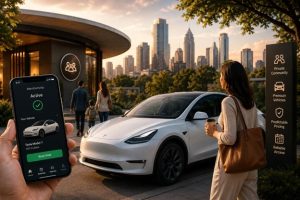
What Makes a Transportation Club Different From Just Hailing a Ride
The distinction is worth understanding clearly because it changes the entire experience. A standard ride-hailing app connects you with a driver in a random vehicle, charges you by the trip, and applies surge pricing at peak hours when you most need reliable transportation. The price is unpredictable. The vehicle is unpredictable. You have no ongoing relationship with the service beyond each individual transaction. A club model works on completely different logic. Members get consistent access to specific, high-quality vehicles. The experience is predictable. The cost is planned. And the technology in those vehicles is chosen for a reason, not left to chance.
Why Advanced Technology Vehicles Change the Value Proposition
When the vehicles in a shared fleet are equipped with advanced autonomous driving capability, the experience of using that fleet is meaningfully different from anything a standard ride-hailing platform can offer. A Tesla FSD ride sharing service is not just a transportation option. It is a consistent, technology-forward experience that members can actually plan their day around. When you know exactly what you are getting every time, transportation stops feeling like a variable you have to manage and starts feeling like infrastructure you can rely on. That shift in how it feels changes how people incorporate it into their lives.
Who Is Actually Joining These Clubs
The profile of people drawn to this model is broader than you might expect. Yes, urban professionals who want to simplify their commute. But also suburban families who ran the numbers on a second car and realized a membership made more financial sense. Remote workers who need occasional reliable transportation but cannot justify the fixed cost of ownership for irregular use. People who want access to newer, more capable vehicles than they could afford to buy outright. Joining a private ride sharing membership serves a wide range of transportation needs under one model, which is part of why the concept is gaining traction across very different kinds of households and lifestyles.
The Real Reason This Is Not Going Away
Transportation clubs are not growing because of clever marketing. They are growing because they solve a real problem that a lot of people have been quietly sitting with. The problem is that owning a car is expensive, complicated, and increasingly hard to justify given how much of the time it just sits unused. The club model removes the overhead while preserving the access. And when you wrap that in genuinely impressive vehicle technology with consistent quality standards, the case for membership starts making itself. People who join tend to stay. And people who stay tend to tell the people around them. That kind of organic momentum is usually a sign that something useful has found its moment.





Leave a Reply